


Darcy-Smith: Script assessing should be more like market research
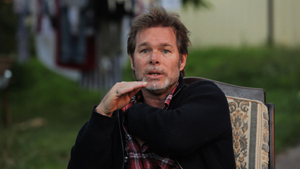 Australia’s film funding agencies should have more individuals read a script before making decisions, debut feature maker Kieran Darcy-Smith has suggested.
Darcy-Smith, writer and director of forthcoming drama Wish You Were Here, told Encore that although they did “pretty well”, he believed too few people at the funding bodies made the decisions. He said: “If a feature script goes into an agency it might land on one or two desks and it might move forward.”
“I know I’m sounding naive [but] if you could get the script in front of ten people then you’ve get a better feeling about how the community will respond. It’s like market research.
“I think it’s about getting those scripts to the widest variety of assessors, and then ask, did it move a lot of people?”
Wish You Were Here’s funding has come from agencies including Screen Australia and workshop assistance from Screen NSW.
Darcy-Smith urged a collaborative approach similar that taken by the Blue Tongue Film collective of which he is a member along with Animal Kingdom director David Michod, and Nash and Joel Edgerton.
“All the stuff we’ve put together over the years, we’ve all been involved with, even if it’s just casting an eye over a script or offering your two bob on cast and key creatives.
“We all care deeply – anything we touch, we want to be great with six talented people pooling their ideas and bad ideas getting nipped in the bud quickly.”
Wish You Were Here is scheduled for release through Hopscotch next year.
Darcty-Smith is also curating the Homebake Cinema Pavilion on Saturday December 3 at Sydney’s Domain. It features short films from Michod, Aden Young, Amiel Courtin-Wilson, Warwick Thornton, Ben Briand, Gregor Jordan, and Glendyn Ivin.

Great idea! Put the scripts out to 100 people – the more the better. Trouble is, the government’s main goal isn’t profit – it’s cultural significance or something like that… who knows what the government producers are looking for but I know for sure they wouldn’t like my scripts.
User ID not verified.
Film Victoria’s investment committee consists of five to ten writers, producers and directors. This helps counteract subjective taste and prejudices about styles of films, filmmaking teams and what the audience wants to see. Informed, diverse opinions generate debate and insight- and help balance an agency’s need to support longer form projects that keep cast and crews in work with innovative projects that advance the industry or might be the wild card successes. I worked as an investment manager with this system for four years and found it very robust. I also worked with a script evaluation model where eight people read each script and that diversity of taste also led to what I felt were well balanced funding decisions. No system is perfect, but I strongly believe that decisions about screen projects that rely on one or two people’s readings will be overly influenced by their personal taste.
User ID not verified.
Peter. whether it is ‘cultural significance’ or ‘box office success’ we have a problem with our assessment processes across the board. Whereas we filmmakers are judged (and quite rightly so) by the quality of the films we make, film funding bodies’ assessors are not similarly judged or, if you like, assessed. The same small clique of assessors can make bad decisions year in, year out, and not only keep their jobs but be elevated to the status of of ‘expert’ and ‘guru’ – with a license to regale experienced screenwriters with their hackneyed formulaic notions of what constitutes a good screenplay – gleaned from books and expensive weekends with other self-proclaimed ‘gurus’. Consistent failure is no obstacle to continued employment of second-rate assessors by the funding bodes but seems to be a prerequisite. That those whose job it is to employ good assessors have little or no idea of what constitutes a good assessor is one of the primary reasons why we develop so many second rate screenplays – which are then invested in heavily by Investment Managers with similarly bad track records vis a via what audiences (Australian and international) want to see. In 40 years of filmmaking I have never been so underwhelmed by the lack of creative talent to be found amongst the creative decision-makers within our funding bodies. If they were subjected to the kind of assessment processes that we filmmakers are subjected to most of them would be out of a job quick smart. And a good thing too.
User ID not verified.
Well… I thought I was doing a phoner about the HOMEBAKE CINEMA PAVILION… Indeed that’s what I spoke about for eight tenths of this interview. I certainly don’t recall ‘urging’ anything, either with regard to script assessment processes within government agencies or filmmaker collaborations… I was, in fact (and this now at the reluctant risk of perceived obsequiousness), in this interview – and have always been – more than complimentary in my comments regarding the agencies and their support, not only of my own recent film but of earlier short films and feature development projects. When asked for my opinion on a perceived debate concerning the funding of ‘auteur projects’ over delineated writer/director teams I recall suggesting something along the lines of any ‘debate’ – if indeed there is one – seeming unwarranted and/or, in my opinion, moot. A project should be supported, or not, on the strength of the script – regardless of who has written it – as well as the ability of the submitting team to bring that script successfully to the screen. If a director has written a really good script, then great. Support it. If an independent writer has written a really good script and has teamed up with a director, then great. Support that one too. These things are never going to be black and white and to suggest restrictions or limitations based on who will be directing seems to me to be absurd. Cut off your nose to spite your face? So, to clarify.. I was finally asked if I had any suggestions re the apparent project assessment process. I did suggest that (obviously) the more assessors the better and that perhaps (as a random top of the head idea) resources might be best used by approving one less development project per round and throwing that money at a broader group of assessors. Perhaps. Art is subjective; get it out to as many readers as possible and look at the numbers when they come back in. But I did stress that this was by no means prescriptive advice and that I thought the agencies were, in the main, doing a pretty good job. Some years there’s better scripts coming in than others. What are you gonna do? The good scripts tend to rise to the surface and get through. Doesn’t always happen though and some do/will slip through the cracks, so, yeah, as many assessors as possible can only be a good thing. Not something I was necessarily ‘urging’ though…
And yes, the Homebake Cinema Pavilion 🙂 Do come along.
Cheers.
User ID not verified.
Hi Kieran, Thanks for your early input.
Our chat started with the Homebake Cinema Pavilion and covered different topics. I found that what you said about script assessing was interesting and took that angle for this piece. I will still be doing something on the Homebake Cinema Pavilion.
I do take your point about ‘urged’ and have changed it to ‘suggested’.
Cheers,
– Colin.
User ID not verified.
Any debate about the worth of a creative idea can only be a good thing..likewise that debate should also examine the worth of the opinion being offered by the filmmaker and the assessor. I have received script advice from assessors and have often walked away thinking, okay fair enough, but what is the quality of that advice hedging around? Often with a little research you find out that the assessors advice centers around limited filmmaking experience, sometimes less than yours and that advice often follows a pattern of “its worked in the past so apply it here”..the thing is audiences don’t always want the past they want they want risky innovative filmmaking. Hopefully we can all work towards creating a better system that is quick to identify innovation and support it.
User ID not verified.
Colin, Tim, in he event that this did not get lost in cyberspace when I posted it last night, why on earth would you censor what is written here? It defames no-one!
Peter, whether it is ‘cultural significance’ or ‘box office success’ we have a problem with our assessment processes across the board. Whereas we filmmakers are judged (and quite rightly so) by the quality of the films we make, film funding bodies’ assessors are not similarly judged or, if you like, assessed. The same small clique of assessors can make bad decisions year in, year out, and not only keep their jobs but be elevated to the status of of ‘expert’ and ‘guru’ – with a license to regale experienced screenwriters with their hackneyed formulaic notions of what constitutes a good screenplay – gleaned from books and expensive weekends with other self-proclaimed ‘gurus’. Consistent failure is no obstacle to continued employment of second-rate assessors by the funding bodes but seems to be a prerequisite. That those whose job it is to employ good assessors have little or no idea of what constitutes a good assessor is one of the primary reasons why we develop so many second rate screenplays – which are then invested in heavily by Investment Managers with similarly bad track records vis a via what audiences (Australian and international) want to see. In 40 years of filmmaking I have never been so underwhelmed by the lack of creative talent to be found amongst the creative decision-makers within our funding bodies. If they were subjected to the kind of assessment processes that we filmmakers are subjected to most of them would be out of a job quick smart. And a good thing too.
User ID not verified.
And how exactly does one submit a script to Film Victoria’s investment committee? Is there any information available? Can any writer submit a screenplay or do we need to have the involvement of all manner of important people first? I’d really like some clear guidance about where to send a script in this country to start the ball rolling!
User ID not verified.
Furthest thing from any writers mind when honing their craft on any new endevours should script assessors – core stories everthing…
Don’t capture essence first time – never will…
User ID not verified.
Jeff,
What useful references can assessors give other than “it’s worked in the past”?
Oh, right…
Their own taste.
And about “assessors advice centers around limited filmmaking experience” I would like to say this:
Filmmakers often lack strong analytical skills. I don’t consider myself a good filmmaker, still a bunch of successful and very talented filmmakers keep hiring me for my advice.
User ID not verified.
Well Karel I bascially disagree with your very simplistic view of how to write a film. I’ve read your blog, you’ve got an angle on the heroes journey and you work it, good for you, good on those bunch of very successful and very talented filmmakers for hooking up with you, just rest assured Karel I’ll never knock on your door and haven’t read one opinion of yours that isn’t mainstream filmmaking by numbers, ” I don’t consider myself a good filmmaker ” but I give out lots of advice…a bit like employing a bad builder to knock up your house..why bother? Filmmakers often lack strong analytical skills..okay.. So you’re not a good filmmaker and you’re giving advice to other filmakers who don’t have analytical skills..sounds like a recipe..for you know what..
Are you seeing the cycle of repition here? Its a cycle thats been repeating itself for years. maybe go and become a good filmmaker Karel..could be a good starting point.
User ID not verified.
I wrote a reply Karel..Encore didn’t see fit to go and publish it..go figure?
User ID not verified.
Strange comment Karel “I don’t consider myself a good filmmaker” but I’m happy to hand out advice. There are so many people handing out advice in this industry who aren’t good filmmakers or have even experienced the creative path towards making a film but somehow know what will work in a script. Am I the only person who finds that a little absurd? if your own taste means you aren’t a good filmmaker, why are people hiring you to hand out advice? There are lots of good filmmakers who are very analytical..hire them instead.
User ID not verified.
KS.
Whatever pays the bills – go with that.
Got doubts though about the wisdom of publicly confessing to those who currently employ you in this field (or any future employer) – that your not a good filmmaker?
User ID not verified.
Jeff,
Well done for going under the belt and not replying to my points.
And if mainstream means connecting with an audience large enough to recoup the cost of a film, yes that’s what I aim for.
K
User ID not verified.
Am I going under the belt Karel or am I just pointing out the obvious like a few other people here? How can somebody proclaim themselves to not be a good filmmaker and still be able to hand out advice on how to assess the quality of a screenplay? I’m a crap plumber, would I tell a plumber how to do his job? Obviously not, but with filmmaking, apparently if you can spin it enough, anybody can hand out “quality” advice irrespective of their experience. I’ve actually heard people who work for funding bodies say to a room full of filmmakers “be careful of screenwriting guru’s they can hand out some very average advice”
My point being that if we continue to recycle the past, how do we arrive at innovative storytelling? You can set a watch to the hero’s journey template for writing a screenplay, its a very predictable ticking clock for the narrative. There are vast amounts of screenwriting snake oil charmers pushing this method around and like I said if it works for you and other fellow filmmakers who see getting advice from somebody who doesn’t rate their own filmmaking abilities as a worthy approach to nutting out the narrative ie: your own sense of cinematic taste, then thats your own boat, so go and row it. I’m just not sure how this approach will insure that a mainstream audience will connect with this method and allow you to recoup the cost of a film. If its that simple Karel, you must be a very busy man in high demand and good luck to you…I wish you all the best.
User ID not verified.
Jeff – you said: ‘audiences don’t always want the past they want they want risky innovative filmmaking.’
Risky films are likely to be complete failures. That’s not a criticism of ‘risky’ films’ – but simply a comment on what, by definition, ‘risky’ means. The higher the likelyhood of failure – the riskier it is. The lower the likelyhood of failure – the less risky it is.
I’ve never met an audience member who actually wants to see a film that is likely to be a failure. So that means, by definition, they don’t want to see risky films.
I think it’s great that people are making risky innovative films .. it pushes the boundaries for everyone else. The riskier – the better.
But I really can’t see any basis for believing that ‘risky’ is what audiences want.
Mac
User ID not verified.
Mac- there is a wealth of information out there about Producers not wanting to see writing by formula and numbers. I know of one successful Oz distributor who hates anything derivative and is sick of teams coming into his office and pitching recycled rubbish. Yeah I said “audiences don’t always want the past they want risky innovative filmmaking”. I’m sure there is an audience out there that love to see recycled narratives like the Hangover 2. I also feel there is a very large percentage of people who are intelligent film lovers and these audience members are being neglected. What I didn’t say was that I’m not a very good filmmaker handing out advice to other filmmakers who have low analytical skills.I mean think about that equation..I’d say that creative mix is peppered with a high degree of risk and “might” result in a complete failure..but then again I’m not being paid to hand out advice by talented filmmakers..so what would I know?
User ID not verified.
Wow the long standing Aussie tradition of knocking is alive and well.
Script Assessing is a strange beast, and really has nothing to do with film making, audiences don’t make films they watch them.
The ad hominem attack on Karel, is not productive, yes he has a blog, you read it, and had an oppinon.
Did you sweat over it? most assessor will tell you, I both love and hate the work. Because they sweet over every comment because you do not want to offer bad advice, you want to be sure that you are accurate and constructive.
An assessment is a difficult thing to write because the aim of good assessors is to recognise potential, make good scripts better, and bad scripts good. If there are problems you want to fix them not destroy a script because of them.
Innovative is not inherently good, only innovative, it is from the Latin (innovāre) to renew, not create. 3D is innovative, and I suspect you would not think that is a good thing. Given the nature of narrative film (as the majority of films were discussing) almost every film is innovative, even if it is a reboot, remake, or part of a franchise, because it is a renewal.
User ID not verified.
Jeff – Ad hominem attacks help no one.
Assessors work hard to identify potential, help good scripts become great, and make OK scripts good. That is to say it is at first Constructive.
As to innovation, Innovation is not inherently good, it only means to renew (innovare) not create. 3D is innovative. Narrative film of the western canon, that is our film, Is always innovative even if it is a sequel in a franchise, a remake or reboot, there are only so many stories you can tell.
User ID not verified.
Jeff – Ad hominem attacks help no one. Audiences are not very good film makers either.
Assessors work hard to identify potential, help good scripts become great, and make OK scripts better. It is first and foremost a Constructive exercise.
As to innovation, Innovation is not inherently good, 3D is innovative, Tent pole scripts were innovative, as were films based on video games. Innovative only means to renew ( innovare) not create.
Narrative film of the western canon, that is our film, Is always innovative even if it is a sequel in a franchise, a remake or reboot, there are only so many stories you can tell , only by knowing the form can it be innovative and only by knowing the past can it strive towards innovation, this is where assessors come in, they know form and history, just like the audience, so ignore them at your peril.
User ID not verified.
In this day and age, most of the thinking about screen writing that people teach and adhere to has become old hat. If you look at the writers whose work is making a splash now, it’s the ones who have recognised that modern audiences want to get into the kind of warts and all intimate character stuff we now know and expect from reality TV. They write characters who can be hilariously vulgar in one scene, touchingly, heart breaking honest and sincere about their emotions the next. Traditional ideas about plot are out the window. Look at James Franco’s film where one man is trapped by a rock, cracking jokes one minute, cracking up the next, to a video camera. It’s derived from a true story, it’s practically a mockumentary. Or is it simply a re-enacment of a true story? Or just film making that’s escaped the rut of the trraditional. Thinking outside the box is what it’s all about. But in Australia, even if you have a great script, where the Hell can you send it? We don’t have a Hollywood. I know this question probably sounds so elementary or naive that no one thinks it’s worth responding to, but I’m serious when I say a lot of people who want to write probably are very unsure where the heck to send a script when it’s done. It’s not as if we have James Cameron in the Yellow Pages here. Where is the best place to send a script? And please, do not suggest some kind of assessment service. I mean to get it made!
User ID not verified.
Okay Karel has an opinion and what I’m doing is attacking or knocking or whatever you want to sling at it..fair assumption?
User ID not verified.
MK – what ? “there are only so many stories you can tell’?
SBS reckon they’ve got 6 billion & still counting.
Been my experience that creative screenwriting goes beyond stories told & more about how its presented. Would remind that this is first & foremost a visual & audio art form in a technical & commercial environment…Completed first draft screenplays are also technical documents structured in such a way that conveys the essense of the original message (story) so it can be easily interpreted (identified) by others. Spelling – Act s- Scene numbers – Fade ins – Fade outs – Names – Day – Night – etc must be spot on & sequential – & unless its a Zombie flick please consider a basic screenwriting rule.
Never have deceased characters in Act 1 killing folk in Act 3.
.
User ID not verified.
WWIP – SBS should be looking for 7 billion as of 31ST October, but then they are public funded so I would not push them to far.
MK – has a point in that we are retelling the same seven stories .
I Would remind that first draft screenplays do not get made they are re-written, by Directors. altered by producers, reworked by actors, and eventually printed with scence numbers on them only to then have pages replaced with various coloured updates and amendments as it is shot.
User ID not verified.
@WWIP
Agree that “Furthest thing from any writers mind when honing their craft on any new endeavours should script assessors.” Only half agree that “core stories (are) everything…” True, when you are a few drafts into a screenplay but not always true when you set out to write something. As many a screenwriter of note affirms, you can start out thinking that you want to write about A and discover, further down the track, that B is actually much more interesting. Here’s Paddy Chayevsky on the subject: “The best thing that can happen is for the theme to be nice and clear from the beginning. Doesn’t always happen. You think you have a theme and you then start telling the story. Pretty soon the characters take over and the story takes over and you realize your theme isn’t being executed by the story so you start changing the theme.”
“Don’t capture essence first time – never will…” is simplistic and any simplistic explanations as to how to write a good screenplay should be viewed with suspicion. There are many many ways to arrive at a finished screenplay – something that an experienced screenwriter comes to understand over time. Unfortunately, inexperienced screenwriters (or those with no experience) often believe that writing a screenplay is like baking a cake – pour all the right ingredients into Acts 1, 2 and 3, set your turning points on the right pages, add a transformational arc for your protagonist etc. and the soufflé will rise. They’re read all the books, they’d done a few expensive workshops with ‘gurus’ who have never had a screenplay produced and now are ‘experts’ in their own right and available to be employed by a film funding body! As someone observed above, if you want your plumbing fixed, you find someone with plumbing experience, not someone who’s read some books on plumbing or done a 3 day $1000 course with the Writers (sorry, Plumber’s!) Guild. Same goes with the doctor, the electrician etc. There’s a reason why doctors study for at least 6 years before being free to diagnose. If these experienced doctors make too many bad diagnoses of if too many of their patients die, they are de-registered. The same does not apply, alas, for ‘script doctors’ (by whatever name) whose patients die on a regular basis.
On a separate but related topic:
I once had the rather unpleasant experience of having a film of mine voted the third worst at a major Australian film festival. I had introduced the film onstage and sat in the audience for the first fifteen minutes before retreating to the foyer to nervously await the audience’s verdict. I didn’t have to wait long. After half an hour a thin trickle of people were walking past me in the foyer pretending I wasn’t there. The thin trickle became a flood. As the end credits rolled there was the kind of polite applause audiences usually give when the filmmakers are present. I was devastated. All that work and the audience didn’t like my film! Having it voted the third worst film at the festival did wonders for my creative self esteem!
Most filmmakers have, at some point, had some variation of this experience – years of work on a project they feel passionately about resulting in a film audiences do not like. It goes with the turf. If your name appears in a ‘film by’, ‘directed by’, ‘produced by’ or ‘screenplay by’ credit and you can’t deal with whatever criticism or feedback you might get for the film, you are in the wrong business. Get out of the kitchen.
Just as filmmakers have to accept harsh criticism of their work in the most public of realms, so too should film bureaucrats – especially those who have been involved in the development of the screenplay or in recommending production investment in a film to be made from the screenplay. It’s at this point, the next observation I’d like to make about script assessors and assessment processes, that Encore’s moderation policy is likely to kick in so, If you want to read more, go to:
http://jamesricketson.blogspot.....-rate.html
User ID not verified.
You can write the best damn screenplay in history and it wont achieve anything but dust layers if it sits in your desk drawer. What to do with it is still the biggest problem for a writer in this country. Who can make a script into a feature film here in Australia?
User ID not verified.
@ JR.
True – whats happening is that I’m giving my experience of screenwriting – core story – get it first time or you don’t etc works for me – this is possible because I choose & research my subjects carefully – heroes remain heroes – we just fill in between. Said previously believe your wasting both time & talent chasing bureaucrats – if your “passionate” about them & believe you know a little bit about them (bureaucrats) start a rough first draft (comedy satire) – then ask them if they’ll fund it?
@ AS.
Your the only one who can make it happen – how can you expect others to believe
in your work if you don’t? Keep busy while your wating for success – hone your craft in different genres – begin with a concept “this movies about”….When you want a break – spend some time emailing potential backers – tell them what your offering – ask them what “they’ve got”? But take your time & be very very selective – vast majority of AUS producers haven’t a clue what their doing – currently taking 4.5% of their own home market (there’s a message there?). And what ever you do – don’t ever give up.
User ID not verified.
@ WWIP. Scriptwriting, filmmaking, my passion. Chasing bureaucrats just a hobby. Have a bit of a bee in my bonnet about transparency and accountability – both of which are distinctly lacking in our funding bodies. As for comedy, not really my forte, though I do wish that Tim Burton would tackle ‘The Emperors New Clothes’ – a story of our time and one which applies to our film funding bodies. Actually, it applies to we filmmakers also.
And Adrian, don’t let your scripts collect dust. Get them out there – send them to any and every director you think might be able to do justice to them. The majority won’t even bother to acknowledge receipt of them but that’s the business you’ve chosen to be in. Just keep at it and perhaps one day you’ll write something so good that it is impossible for anyone to ignore. But be prepared for producers and directors who do read your screenplays to tell you they think your scripts suck – not because they are mean-spirited but because they are. Your best friend out there is the person who tells you the truth about your script (see Emperor’s New Clothes observation above) and who can explain to you what you are doing wrong and, with a bit of luck, suggest ways to fix the problems.
Agree with WWIP: Don’t ever give up.
User ID not verified.
Thanks for taking the time to answer my question. I suppose there’s no way to ask a question like that without coming off sounding naive. But in my experience, there’s no clear path in Australia to get a script in front of someone with the ability to make it into a film. Anyway, thanks for the replies, much appreciated. I agree, it’s important not to ever give up, no matter what.
User ID not verified.
A S – we all started out naive – suggest you hone your craft before you start worrying about other things & other people beyond your control at this stage of your developement – simple test? if you’ve completed 1 perhaps 2 seperate 1st draft screenplays (features) your a writer – 5 + a storyteller – write for TV – your a scriptwriter…And believe me when I say once you’ve mastered screenwriting – literary world is your oyster.
User ID not verified.
Reality check: one or two screenplays doesn’t mean jack.
With rare exception, your first couple of screenplays are going to be crap.
Absolute crap.
Chances are you won’t have a solid grasp on what you’re doing until you get five or six screenplays (maybe more, maybe even double figures) under your belt.
In the meantime, the only thing to do is read screenplays, write screenplays and rewrite screenplays.
Not quite sure what the connection between screenwriting and the literary world is…
User ID not verified.
@ Bobby Dazzler
Sounds like you’ve learnt this the only way you can – the hard way. Do your best, fall flat on your face. Learn from your mistakes, write another screenplay – and so on. Be careful who you get feedback from. Learning the CRAFT of screenwriting (about which ‘gurus’ and other ‘experts’ know a good deal) is only the first step in being a good screenwriter and, I would argue, not the most important skill for a writer to have.
An interesting perspective on this question is provided, in a tangential but telling way, by Michel Houellebecq in his latest book THE MAP AND THE TERRITORY. Here is Houellebecq’s description of his central character, Jed, at a moment when he makes a key decision in his life as an artist:
“Many years later, when he had become famous – extremely famous if the truth be told – Jed would be asked numerous times what it meant, in his eyes, to be an artist. He would find nothing very interesting or original to say, except one thing, which he would constantly repeat in each interview: to be an artist, in his view, was above all to be someone submissive. Someone who submitted himself to mysterious, unpredictable messages, that you would be led, for want of a better word and in the absence of any religious belief, to describe as intuitions, messages which nonetheless commanded you in an imperious and categorical manner, without leaving the slightest possibility of escape – except by losing any notion of integrity and self-respect. These messages could involve destroying a work, or even an entire body of work, to set off in a radically new direction, or even occasionally no direction at all, without having any project at all, or the slightest hope of continuing. It was thus, and only thus, that the artist’s condition could, sometimes, be described as difficult. It was also thus, and only thus, that it distinguished itself from other professions or trades…”
This is an integral part of the mindset, I believe, that a screenwriter must bring to his or her work. When you’ve acquired your craft skills (no harder than learning to play guitar or build a table) and you have a screenplay that you have no choice but to write in the way that your ‘intuition’ tells you is right, chances are you are onto something interesting, good, perhaps important. Let your craft skills (honed over years of practice) serve whatever the Muse presents to you. Be patient. It ain’t gonna happen fast!
User ID not verified.
The hard way is the only way, James!
User ID not verified.
I’ve lost count of how many scripts I’ve written. But that still doesn’t mean there’s a mover and shaker I can send them to.
User ID not verified.
Thanks James for sharing that quote…It made me think of all the artists who I know of..the ones who struggle with the creative life, trying to bring expression and meaning to their existence via creativity and obeying all the compulsions that go with that approach to living your life. Its a life not for the faint hearted. I think that Houellebecq quote is one of the best descriptions I’ve read of what the writers/artists life can look and feel like. ” Someone who submitted himself to mysterious, unpredictable messages, that you would be led, for want of a better word and in the absence of any religious belief, to describe as intuitions, messages which nonetheless commanded you in an imperious and categorical manner, without leaving the slightest possibility of escape – except by losing any notion of integrity and self-respect.”
Submitting to mysterious messages, thats the essence right there. The compulsion to create, I think if you honestly love that compulsion and listen to those messages whilst also obeying and breaking the rules of craft your idea of success will find you somehow. I think as an artist you’re always being tested and asked by some strange mysterious force ” how much do you want this?” I honestly feel if you are prepared to struggle and fight the good fight and be brutally honest with your self and your own talent, you’ll find a way. You have to be cunning and pragmatic and you have to have a variety of ideas all cooking at different levels..but if you really do love the craft..you will find a way..and that way/path forward and the terrain involved is different for every writer/artist. Best of luck to all and keep listening to those messages and keep creating.
User ID not verified.
Or, you could not be an artist, and just pump out high-concept summer blockbuster scripts and live in a mansion with a supermodel wife.
User ID not verified.
Doug
Here’s another quote (below) for you and others interested in this mysterious business called screenwriting.
And for you, Adrian, if you’d done your homework (20 seconds on google) you’d know that I’ve won an AFI award for screenwriting. Why haven’t you sent me one of your screenplays and asked if I would read it and give you feedback? Doors are not going to magically open for you. You have to keep knocking and, if need be, knock them down. I am not an expert or a guru when it comes to screenwriting but I’ve been doing it for 40 years, studied drama for 5 years at uni, and I think I know a thing or two. If you do want to send me a screenplay I’ll be brutally honest. If I think its crap I’ll say so and tell you why I think its crap and suggest ways to improve it. If one of my observations is useful, perhaps it will help you do another and better draft. You should do the same with other producers, directors and screenwriters. They are not going to chase after you – no matter how many times you ask @Encore online where to go with your screenplays. It doesn’t work that way.
A quote from Jean Claude Carriere’s THE SECRET LANGUAGE OF FILM
“Work on a screenplay often operates in a series of waves. The first waves are exploratory. We open all the doors and we begin to seek, neglecting no path, no blind alley. The imagination launches unbridled into a hunt which can lead it into the vulgar, the absurd, the grotesque, which can even make the imagination forget the theme that is the object of the hunt. Whereupon another wave rears, surging in the opposite direction. This is the backwash, the withdrawal to what is reasonable, essential, to the old question: exactly why are we making this and not some other film? Quite simply, what basically interests us here? This is the moment when we survey the road the characters have travelled, but we also look at verisimilitude, structure, interest, levels of audience understanding. By backtracking, by returning to our original garden, we obviously abandon along the way the majority of our illusory conquests – but not necessarily all of them. We return to scholarly, sometimes commonplace and even pettifogging concerns. They help us take stock. In the heat of the chase we might easily have forgotten to bring along our supplies, our drinking water, our maps. Rare are the authors who can afford, on their own, this balanced and impartial movement between the two zones.”
User ID not verified.
@ Brian
Yes the old Don Simpson method as explained by the man himself
“We have no obligation to make history. We have no obligation to make art. We have no obligation to make a statement. Our obligation is to make money.”
User ID not verified.
Doug
Here’s another one from Carriere that I think you’ll like. From memory, Carriere never talks about ‘craft’; never mentions three act structures, turning points, transformational arcs and the like. He is concerned with the impulses that lead the screenwriter to apply his or her craft skills to giving form to the impulses, the intuitions or whatever word each of us may use to describe the indescribable.
from Jean Claude Carriere’s THE SECRET LANGUAGE OF FILM
“This step by step discovery of a theme, a story, a style – a highly erratic process, marked by long dry spells and sudden flashes – closely resembles the work of an actor venturing into a part. What will he find? At first he has no idea. A play – by Shakespeare, say, or Chekhov – always presents a vibrant and indefinable whole, imperious to the most piercing analysis. It is out of the question to tackle those plays as if they were the expression of a particular point of view. To do so would mean stifling them, strangling them, the eternal pitfall of limited directors, who invariably force their own terms on anything which is beyond their comprehension…A true author never knows exactly what he means. He is what Victor Hugo called “the mouth of darkness”. Words are transmitted through him, often quite beyond his control. They come from obscure regions; the richer and deeper his genius, the vaster those regions will be. They are regions he shares with others, and even, in the case of the greatest authors, with all humankind, for he becomes one of humanity’s voices.”
User ID not verified.
Thanks James, I might just take you up on that.
User ID not verified.
Adrian, you can reciprocate by reading one of my screenplays and telling me what crap it is! You only have to look at the films we make to realize that we screenwriters nearly as tough on ourselves and our fellow screenwriters as we should be. We’ve set the bar way too low!
User ID not verified.
@James/Adrian & other screenwriters:
How great would it be to have an online community for Australian writers. Novelists, songwriters, poets, and of course screenwriters. Writers could share their stories on forums and trade notes and feedback with other users. Established writers in relevant industries could offer articles and web chats.
I think it’s something simple that would really benefit this community. And as James implied, the more people that see a script = more criticism = more effective re-writes = better script overall. Plus I might finally meet a suitable writing partner!
User ID not verified.
Brian, I agree with you. One idea I have been playing around with and which I think would work would be for someone to set up a website where writers such as Adrian who want to get their screenplays out there could post the first 10 pages of their screenplay or any and everyone to read. If a producer of director thinks, “Mmmm, this looks interesting…” they can contact the screenwriter and request an opportunity to read the rest of the screenplay.
I reckon if you haven’t intrigued a reader (producer/director) by page 10 chances are that it is not his/her cup of tea.
Similarly, screenwriters could get to meet this way online and be aware of what their fellow screenwriters are up to. Some great collaborations might come out of this. Some great dialogues.
Apart from anything else, think of the printing and binding costs that could be saved; the postage!
User ID not verified.
Why don’t we start a group on Facebook for that purpose? All the functionalities for forum type discussions are already available there. Just a suggestion. I’d be happy to read your work and give some thoughts James. Yeah, I think it’s a great idea.
User ID not verified.
@ Doug.
“Commercial film is a juncture where art meets commerce”.
Sydney Pollock.
Believe the challenge facing AUS ‘commercial’ screnwriters right now is finding art that makes money…
User ID not verified.
Hey whoa back there WWIP…I’m all for the high concept commercial films that entertain the audience, I’m a big fan, when they are done well.The problem is that in this risk averse cash strapped world the chances of getting these developed in this country are slim. What I’d like to see is a focus on emerging platforms like IPTV, utilising these platforms to help filmmakers gain experience and build an audience around concepts and potential narratives. I mean somehow we have stopped trying to make the next “Mad Max”, not the same film but that innovative, low budget high concept genre driven film and I’m not sure why..we kind of slid into grim social realism, explored that to death..we’ve made some good films in this genre but somehow stopped nurturing the other.
User ID not verified.
James Rickeson ‘you’d know that I’ve won an AFI award for screenwriting’ – um, hmmm, how do I put this…. big woop. The AFI’s are a joke.
User ID not verified.
Doug – what you write is true – but this is the age of an ever expanding www – do what others do – move offshore…(metaphorically)…Uncertain financial times such as these everyone everywhere is currently experiencing have always signalled good times for our medium…
User ID not verified.