Iron Man VFX not eligible for PDV offset
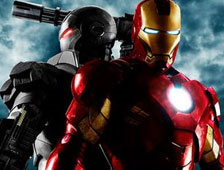 Fuel VFX’s work on the #1 blockbuster Iron Man 2 was not eligible for the PDV Offset because it didn’t meet the minimum spend threshold, as the post-production sector lobbies for a reduction from $5m to $0.5m.
“I don’t know whether Australia has made us competitive, so we’ve decided to be competitive and get this work on our own merit,” Fuel founder and executive producer Jason Bath told Encore.
“The Australian dollar is almost reaching parity, so we don’t have that edge anymore and our costs are very similar to companies in the US. The difference would be the rebate, which we didn’t’ reach on this film,” he said.
Currently, the 15 percent PDV Offset has a minimum threshold of $5m on VFX, animation, audio post, editing, green-screen photography and miniatures work done in Australia.
“We were nowhere near that,” explained Bath. “We’ve been lobbying very hard to get it reduced and we hope it will happen very soon, that it will come down to $500,000, which is significantly less.”
To secure the Iron Man 2 job, Fuel had meetings with Marvel Studios, co-producer Victoria Alonso and VFX supervisor Janek Sirrs, who liked the Fuel reel and signed the Sydney-based company to do 130 shots for the film alongside major VFX supplier Industrial Light & Magic and other international firms.
“You compete for every single project, with every single vendor in the world. In this case we were very competitive and, at the same time, Marvel is a studio that likes to work with people with whom it can develop a connection, so the fact that they liked our reel helped,” said Bath.
According to VFX supervisor Andrew Hellen, one of the main challenges was the sequence where the villain Whiplash is creating his weapon – a pair of metallic whips with bright, hot ‘plasma’ energy running down them, surrounded by lightning-like electrical charges – in a dark room in Russia.
Fuel was one of five international vendors working on the project, which meant their work had to match that of their fellow artists. The main Whiplash action sequence, set in Monaco, was created by UK-based VFX house Double Negative, and Fuel had to be consistent with the look developed by them, even if that involved reverse-engineering it. The case was further complicated because that look was still being developed at the time the Fuel team were already working on their shots, which were set inside a dark room – as opposed to Double Negative’s, which take place outdoors.
“It had to tie in to what they were doing, while they were still developing the look, so that was very tricky. We had to analyse what they were doing, break it down, because there were all these different elements to the whip and the way it works, so that was quite a challenge,” said Hellen.
The situation was even more challenging because Fuel was brought in late in the process, giving the company less time to plan the work that had to be delivered.
“When you come in early you have more time. Some things do change as you go, but because you’re involved in pre-production, production and post, it means that you can do better planning,” said Hellen.
“We worked on it for 3.5 months. They were cutting as we were working; scenes changed, were dropped or added in. It’s challenging, staying on top of that and making it work.”
This is the full list of sequences/shots Fuel worked on:
– CG snow and matte painting in opening Moscow shots.
– CG whip energy effects and CG exoskeleton suit in Whiplash’s apartment.
– Design and production of CG Stark Jet and interior comp work.
– Enhancement of translites in Stark’s mansion (boxing ring scene).
– Design and production of CG base to Stark robots.
– Design and CG build only of the MkIV RT Unit (asset handed over to Lola for shot execution).
– CG fixes to WarHammer’s prac suit at Edward’s AirForce base scene.
– Full sequence: Home-made particle accelerator scene including reconstruction of set and SFX elements.
– Design and production of MkVI RT unit shots (at end of previous scene).
– Full sequence: Black Widow takes down the bad guys in the Hammer Industries hallway, included design and production of CG gadgets.