
The philosophy of creativity
 A highlight of Cannes for me has been the wisdom of philosopher Alain de Botton, a man so clever his brain has eaten his hair.
Here, in a series of quotes, is some of the clever stuff he said today about creativity, media and advertising.
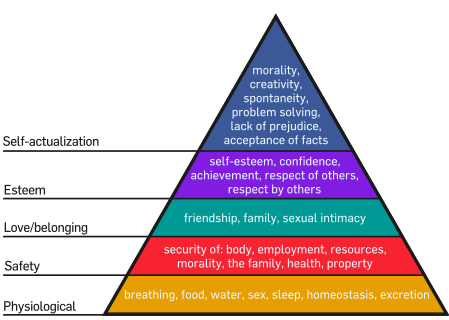
“The world’s most powerful multinational corporation is the Catholic church. It has made lots of money by selling a good that people need, like a sense of belonging and self esteem. Advertising rarely does that. Too often it caters to the bottom end of Maslow’s hierarchy of needs. Advertising needs to commoditise things that we need in life. You can make money from that, rather than focus on vain and menial desires like sex. ”
“Difficulty and suffering is normal. It’s an absolutely necessary part of creative life. If you don’t suffer in some way, you can’t be creative.”
“The problem with alcohol and religion – two of the great western narcotics – is that they remove suffering too early. Christianity tells us that failure is fine. But we should let suffering sit with us and infuse us with creative energy to do better things.”
“Get a human skull and put it on your desk. The thought of death is both a relaxant and a stimulant. It frees you up and brings you perspective. It makes us feel usefully small.”
“The great thing about animals is that they don’t care about status. They release a part of you that’s not concerned with the tiring business of tracking your achievements and success in life.”
“The sabbath is really a check on megalomania. Even advertising people need one day a week where they realise that we are not in charge of our own destiny.”
“There is no such thing as work-life balance. Everything worth fighting for is unbalancing and frightening. The key route to a creative life is to identify the ways of life that are not in tune with our deeper selves, so we can move on.”
“All of us wrestle with a fear of failure. What are we afraid of? Not so much material suffering. But humiliation. And there’s nothing that plays on that fear quite like the media.”
“Read any newspaper. Most stores are stories of failure. Losers. The ways these stories are told is terrifying. They keep us frightened and that hurts creativity.”
“The best ads are childishly simple.”
“Ad agencies should employ philosophers, to give them a sense of perspective on the world. Philosophers are good at getting down to the nitty gritty of ideas.”
“In the UK, The Sun newspaper supposedly reports the bad stuff. The Guardian reports the good stuff. The truth is that The Sun is just more interesting. The Guardian is lazy in how it tells stories.”
“Marketers need to learn to ignore idle chatter in social media and sometimes switch off the comment boxes. Two way dialogue is not always better.”
“Even if you have 50 or 50,000 vocal enemies in social media, don’t forget that you probably have a million people who are quietly appreciating what you’re saying.”
“Good art – and good advertising – is about the distillation of ideas that would take years to explore in books and philosophy.”
“All of us need a story within us about how we fail and how it’s noble. We need a narrative about how we are people who have lost, but are not losers. No creativity can occur without the accommodation of failure. If you are not prepared to fail, you cannot succeed creatively.”
Robin Hicks

WOW. Love it! Thanks for sharing…
Agreed. He’s great.
I must tell my psychiatrist that
Tripe stirred through a bowl of BS.
Interesting stuff, cheers Charles.
I think i want a skull for my desk now…
Excellent and insightful, thank you for sharing
Thankfully I still have a full head of hair.
Thanks for including de Botton’s comments. Insightful stuff.
I imagine it would help, if said skull belonged to a client.
Shouldn’t Maslow get a mention for his Heirachy of Needs triangle?
Whoops! Teach me to skim better.
Hi there, yep, love him too. Have read his book about Proust and a novel about love and always meant to get around to State of Anxiety and the book about travel (and why the anticipation and recounting is soooo … much better than the reality). Disgusting that a philosopher should be so distinguished and profound at such a young age. Hope you are well, Vanita X
“Advertising needs to commoditise things that we need in life. You can make money from that, rather than focus on vain and menial desires like sex.”
By putting sex at the bottom of the needs pyramid, Maslow has made an error which De Botton has repeated.
For modern humans, sex is about self-actualisation. This is why, when it comes to marketing, leveraging it works. You’re appealing to what people want to become/be/actualise.
The quasi-Victorian prudish placement of sex alongside breathing and shitting is a judgement call, and not based on any real-world observation of how humans use sex.
Asides from that flaw, interesting piece.
‘Advertising needs to commoditise things that we need in life.’ Not sure commoditise is best choice of word, commercialise, maybe.
@tom yes, but you’re word is ‘leverage’ whereas the advertising convention is ‘exploit’ often in context of ‘inadequecy’.
Love the ‘..a man so clever his brain has eaten his hair.’ sentence.
A great mind indeed.
@Tom, ‘sex’ may be down the bottom of the chart, but ‘sexual intimacy’ places higher up, next to family.
The “physiological” mention of sex in De Botton’s chart is likely referring to reproduction, which we need to survive. That’s why it goes next to other base needs like air, water, food, etc. The emotion aspect of sexual intimacy is quite a different need, which is why it’s placed in the love/belonging bracket. Whether you agree with how it’s broken down, it’s an interesting, very simple and clever breakdown of our core wants and needs in life.
The chart is the work of Abraham Maslow and has been for some time.
Mr de Botton is using this well known Hierachy of Needs breakdown to illustrate his points.
“The great thing about animals is that they don’t care about status..” I have 2 cats – try telling them they don’t care about status when then are fighting for prime position in front of the heater or on the bed, or who is first through the door, who gets the dinner bowl first. If he means they don’t care about your status, then he is dead right, but they are very, very aware of their own status within the feline hierarcy.