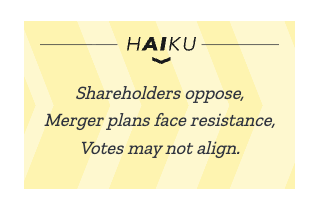
With magazine circulations plummeting, FHM closing and rumours rife on future ownership of ACP Magazines, Paul Merrill says the only way forward is launching new titles.
Eight years ago in the UK, nearly a quarter of all magazine sales came from magazines that were less than four years old. In Australia, the figure was slightly lower, but still significant. Today, the situation is very different. For a start there are so few new magazines. Yes, Masterchef briefly flared, and Top Gear made an initial impact. But Grazia and Alpha fizzled, and now ACP has shelved their plans to launch Elle.
The 2012 London Olympics will be the biggest televised sporting event of our time. Brooke Hemphill discovers the logistical challenges and technical requirements of producing the event.
From July 27 to August 12, the Australian media will go sport crazy as the Games of the XXX Olympiad, aka the 2012 London Summer Olympics, unfold. The games will be the most televised sporting event of our time as broadcasters look to master every manner of technology at their disposal.
In this guest post, Sputnik’s Rodd Messent has a theory on why audiences have taken to The Voice .
I am an addict of Channel Nine’s hit show The Voice. Such is the extent of my addiction I seriously think my housemate might kick me out of our apartment for the semi-frenzied yelling and tweeting that ensues in our lounge room each time the show airs.
It’s the first time in almost three years that such disagreement has resulted in less than civil behaviour towards one another, and it’s made me think it might be a microcosm of the large volume of online debate about the show and, correspondingly, an explanation for its success as a social TV experience.
In this guest posting, Dave Burgess, who painted ‘No War’ on the Sydney Opera House, claims that ‘amoral’ advertisers have copied his idea.
Culture jamming is a 28-year-old term coined by the San Francisco-based band Negativland, who declared that the ‘Studio for the cultural jammer is the world at large’.
In this guest posting, Anthony Freedman argues why branded content is making a comeback.
A few short years ago, probably concurrent with the advent of the PVR, a new term emerged within the marketing communications industry; branded content. This was really synonymous with advertiser funded TV shows where programming was created by brands and deals struck with networks to broadcast them.
There were varying degrees of success with this model.
Is shock an underused weapon in Australian advertising, asks Robin Hicks
Today, Sydney agency The Cabana Boys used an image of a mouth sewn together to shock people with the idea that problem gamblers lie to conceal their habit. Is it the most disturbing image ever? No. Will it get banned by the Advertising Standards Bureau? No. But it did make me wonder why shock is not used more often in Australia – and not just by charities and government bodies. (WARNING: NSFW)
Jason Mountney goes on the set of Channel Nine’s talent search series, The Voice, to see how the format, based on an international franchise, has come together. What ingredients have gone into making this certified hit that’s rated more than two million viewers on three consecutive nights?
Mike Goldman has one of the toughest jobs on the set of the Nine network’s new talent show, The Voice. He not only has to narrate the show, but also keep the audience from losing their enthusiasm as they realise shooting TV programs takes a lot longer than the one-hour bursts they see in their lounge rooms. A lot longer.
While it’s a shame The Global Mail has failed to make an impact on the media landscape, the signs have been there for some time.
I love the concept of a well resourced, philanthropically-funded independent news site. Anywhere in the world, that’s a rare and wonderful thing. In Australia even more so. So I hope that Grame Wood gets to see his investment make a difference.
And I have no inside info on whether Monica Attard’s sudden departure is linked to the site’s failure to find an audience so far.
Regardless, here are nine areas they can easily start to address:
Does the launch of philanthropically funded news site The Global Mail signal a new era for journalism or is the model destined to be a passing fad, asks Cathie McGinn in this article first published in Encore magazine.
With little fanfare, philanthropically funded news site The Global Mail launched in February this year.
The online-only title received a generous five-year funding commitment from businessman Graeme Wood, founder of accommodation website wotif.com, who donated $15million.
In this guest posting, Gareth Collins argues that the role of a great account manager is to make the work better
I’m surprised at how many suits I meet who don’t know their role in the advertising business. The question ‘what does an advertising account manager or director do?’ is frequently met with answers such as project manager, relationship manager, plate spinner or go between … and those are the nice ones.
Success is judged on the ability to manage a process, be strong administratively and get stuff done. And while a good suit needs to do all of these things brilliantly, if these are the traits that define a great suit, then I’m in the wrong job.
From advertising campaigns to online video series, the term ‘transmedia’ gets quite the work out. But what does it actually mean? Cathie McGinn trawls the media landscape for a definitive definition.
Transmedia, all media and multiplatform are terms often used interchangeably when referencing modern storytelling techniques. Yet, depending who you speak to, there are distinct differences between them.
Sometimes brands have big ideas. Sometimes marketers get so caught up with a grandiose idea that instead of finding engaging ways to sell breakfast cereal, they start to believe their own rhetoric. And sometimes it’s just lazy marketing. Here are my top seven inadvertently patronising pieces of communication…
1) Last night thousands of women gathered in Sydney’s Centennial Park to take part in She Runs the Night, an event created by Nike.
In this guest post, Chris Walton argues that the media industry needs to take a new approach to TV trading
There has been a significant amount of coverage recently about how successful The Voice has been. Indeed, audience figures of 2.6m+ people are very impressive these days. Based on reports, this is apparently double the size of audience that Nine was hoping for in the lead up to the programme launching.
Music can make an average ad great. So why, Robin Hicks asks, is music the last thing a creative thinks about when writing an ad?
My favourite TV ad of the year so far is the Let Yourself Go spot for Kangaroo Island.
When it didn’t win Mumbrella’s Ad of the Month for March (it came third) I felt aggrieved for the agency that made it. But less so a week later when it emerged that the agency had paid celebrities to tweet nice things about its work.
Let Yourself Go is a stunning spot with lots of pretty images. But it would probably have had a similar effect on me if I’d watched a blank screen for 60 seconds.
Dr Mumbo was fascinated to read the results of a new study which demonstrates that adlanders are not like normal people. 26% of ad/marketing professionals have used illicit drugs at an office party, compared to only 3% of what Dr Mumbo fondly refers to as Muggles, or non-magical people.
Most crucially, advertising staffers use social media differently to “normal” people, with 71% paying attention to brand posts on Facebook compared to 23% of Muggles.
The study was distributed via social media as an infographic and was commissioned by an advertising agency.
Dr Mumbo saw it on Facebook.
Quad erat demonstrandum.
By Cathie McGinn
·
May 15th, 2012 at 12:12 pm ·
Comments: 9
Never let it be said that the good people at News Limited are slow to respond to the digital revolution. In today’s Australian, Dr Mumbo was awed to learn that
News Limited is seeking a new publishing platform that will feed relevant tweets and social media updates directly to journalists as they draft stories, just like a wire service.”
Dr Mumbo is a philanthanthopic fellow so he’ll happily waive his usual hefty consulting fee and offer these suggestions: RSS. Tweetdeck. Storify. The internet…
And he’ll politely pretend that this and this and this never happened.
By Cathie McGinn
·
May 14th, 2012 at 1:47 pm ·
Comments: 2
The proceedings in the Leveson Inquiry into press standard and Murdoch staff’s alleged phone hacking being held in Court 73 make compelling reading, but the internet wags of Twitter have created a meme that’s almost as riveting: #popleveson
Back before the world YouTube ruled the world, the BBC aired a show – which was to be the first of many – featuring TV bloopers.
It included a young newscaster, dealing with disaster magnificently.
In the years that followed, Dr Mumbo tried to hunt it down, without success. Every few months he would search the name “Guy Michelmore” on YouTube, to no avail.
Until today. Today he found it. Somebody’s only gone and uploaded it.
Ladies and gentlemen, the best TV blooper ever…
By mumbrella
·
May 10th, 2012 at 6:51 pm ·
Comments: 7
Dr Mumbo is disturbed by what MasterChef’s George Calombaris looks like he’s about to do to this pig. And curious as to how a creative department went from the idea of fresh coffee to a celebrity chef attacking a swine.
Dr Mumbo was delighted to read via Crikey that the real battlers of the budget – Australia’s free TV networks – are getting another $70m discount on their licence fees and a further $143m towards the digital switchover.
In unrelated news, Australia will not be keeping its promise on aid to developing nations owing to budgetary constraints.
By mumbrella
·
May 9th, 2012 at 9:40 am ·
Comments: 3
Dr Mumbo loves it when the Muggles come to Mumbrella and hit the comment thread with mistargeted conversations with brands that aren’t listening to them.
It was arguably at its most memorable during the Share A Coke campaign when the comment threads were awash with requests for Coke bottles to have their names on them.
Regular listeners may know him as the third member of popular Today Network drivetime trio Fifi, Jules and The Other One. But it seems that show anchor Byron Cooke is better known overseas.
He’s picked up the title of International Radio Personality of the Year 2012 at the World Radio Summit in the US, beating the likes of the BBC’s Zane Lowe, Chris Moyles and Steve Lamacq along with Triple J’s Richard Kingsmill.
According to the Southern Cross Austereo press release, Cooke said, “I was totally shocked to get the nomination and to see my name alongside four of music radio’s heavy hitters is nothing short of an honour.”
Not half as shocked as Dr Mumbo suspects Chris Moyles was.
By mumbrella
·
May 1st, 2012 at 5:08 pm ·
Comments: 1